
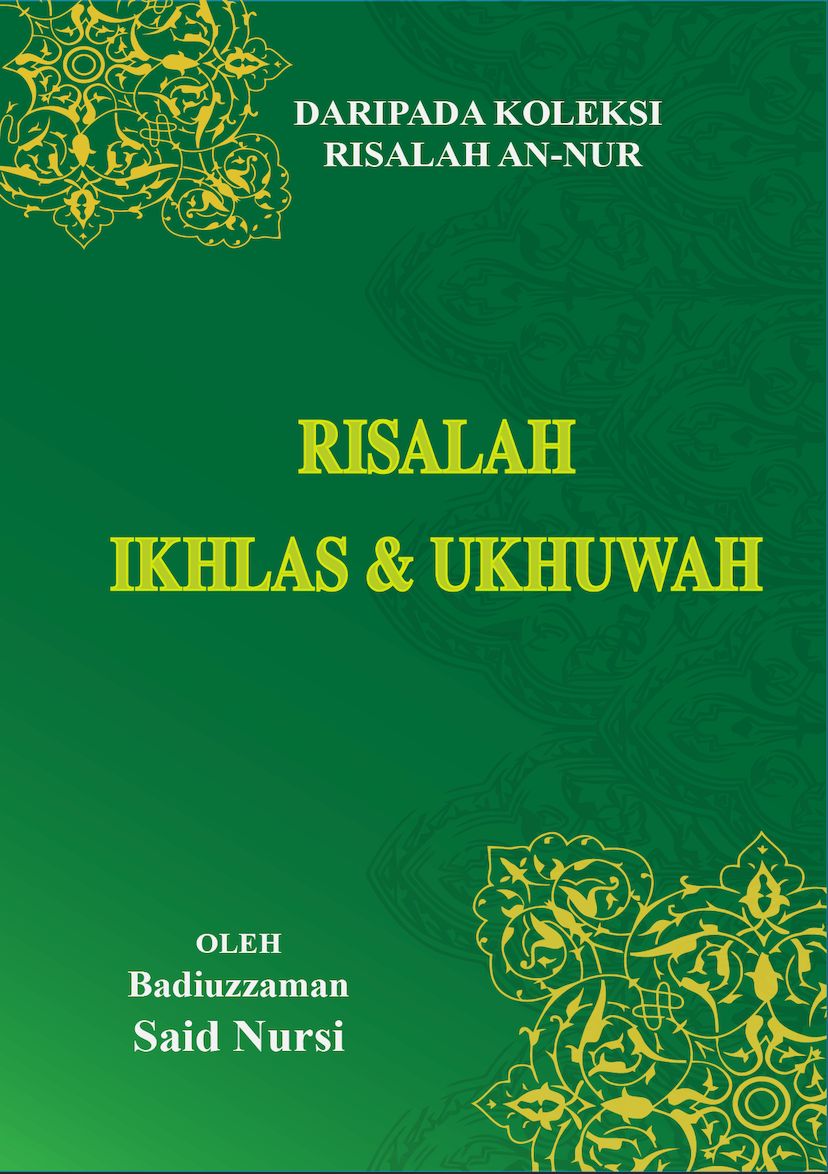
Risalah Ikhlas & Ukhuwah
This book consists of two main sections from the Risale-i Nur Collection: The Treatise on Sincerity and The Treatise on Brotherhood. Together, they offer guidance for nurturing sincere service to faith and fostering unity among believers—especially in an age of spiritual struggle and fragmentation.
The Treatise on Sincerity includes the Twentieth and Twenty-First Gleams. The Twentieth Gleam answers the critical question: Why do people of truth and spiritual alignment—religious scholars, people of faith, and spiritual communities—often suffer from rivalry and discord, while worldly and heedless people appear united? In addressing this perplexing phenomenon, Bediuzzaman outlines seven key reasons, offering a deep moral and psychological analysis.
The Twenty-First Gleam presents a set of principles for attaining and preserving sincerity in religious service. Recommended to be read at least once every fifteen days, this section emphasizes that sincerity is the foundation of all spiritual work. In times of difficulty and under intense pressure from both external enemies and internal weaknesses, it asserts that sincerity becomes not only a virtue but a necessity for success in sacred service. It is described as a source of strength, a shield against hypocrisy, and the essence of pure worship.
The Treatise on Brotherhood, the Twenty-Second Letter, contains two main parts. The first outlines the moral and spiritual foundations for love, forgiveness, and unity among believers. It strongly condemns hostility and rancor as destructive to personal faith and communal harmony. With persuasive reasoning, it explains that enmity is unjust and harmful—not only spiritually but also socially, emotionally, and morally—proving this through both wisdom and lived human experience.
The second part focuses on greed, showing how it harms both the individual and society. It emphasizes contentment and reliance on divine providence as cures for the disease of excessive desire. The closing section includes a reflection on the significance of charity (zakat) and an allegorical dream illustrating the importance of spiritual purity in relationships.
The final passage powerfully condemns backbiting, portraying it as a sixfold ugliness: logically, emotionally, spiritually, instinctively, socially, and ethically. Through vivid moral imagery, it shows that speaking ill of others is a violation not just of faith, but of one’s own human dignity.
Together, these treatises offer profound reflections on interpersonal ethics, spiritual integrity, and the essential bond of unity that must tie together those who serve a higher cause. They warn against the hidden dangers of ego, rivalry, and suspicion—urging instead a path of love, patience, humility, and mutual respect.



Reviews
There are no reviews yet.